Manual vs. Automatic Diesel Transmissions: Different Repairs, Different Warning Signs
There are key differences between manual and automatic diesel transmissions. We dive into what those are, from common warning signs, repair challenges, and maintenance tips that help heavy-duty truck owners avoid breakdowns and costly downtime.
Your transmission does a lot more than simply shift gears. In a heavy-duty diesel truck, the transmission controls how power gets transferred from the engine to the drivetrain. This directly affects towing performance, fuel economy, reliability, and drivability.
No matter if you’re driving a rig with a manual or automatic diesel transmission, both systems experience wear over time. That’s just facts. However, the warning signs, maintenance requirements, and repair processes can vary significantly depending on the transmission type.
Understanding those differences can help you catch problems early, avoid costly breakdowns, and keep your truck working efficiently on the road.
What’s the Transmission For Anyway?
Like most components in your truck, you really just want it to work. And transmissions work by optimizing engine power via different gear ratios before sending it through the drivetrain.
Heavy-duty trucks commonly use three transmission types:
- Manual transmissions
- Automated manual transmissions (AMTs)
- Automatic transmissions
Each system manages gear changes differently, which means each develops its own set of common issues and warning signs.
Manual Diesel Transmissions
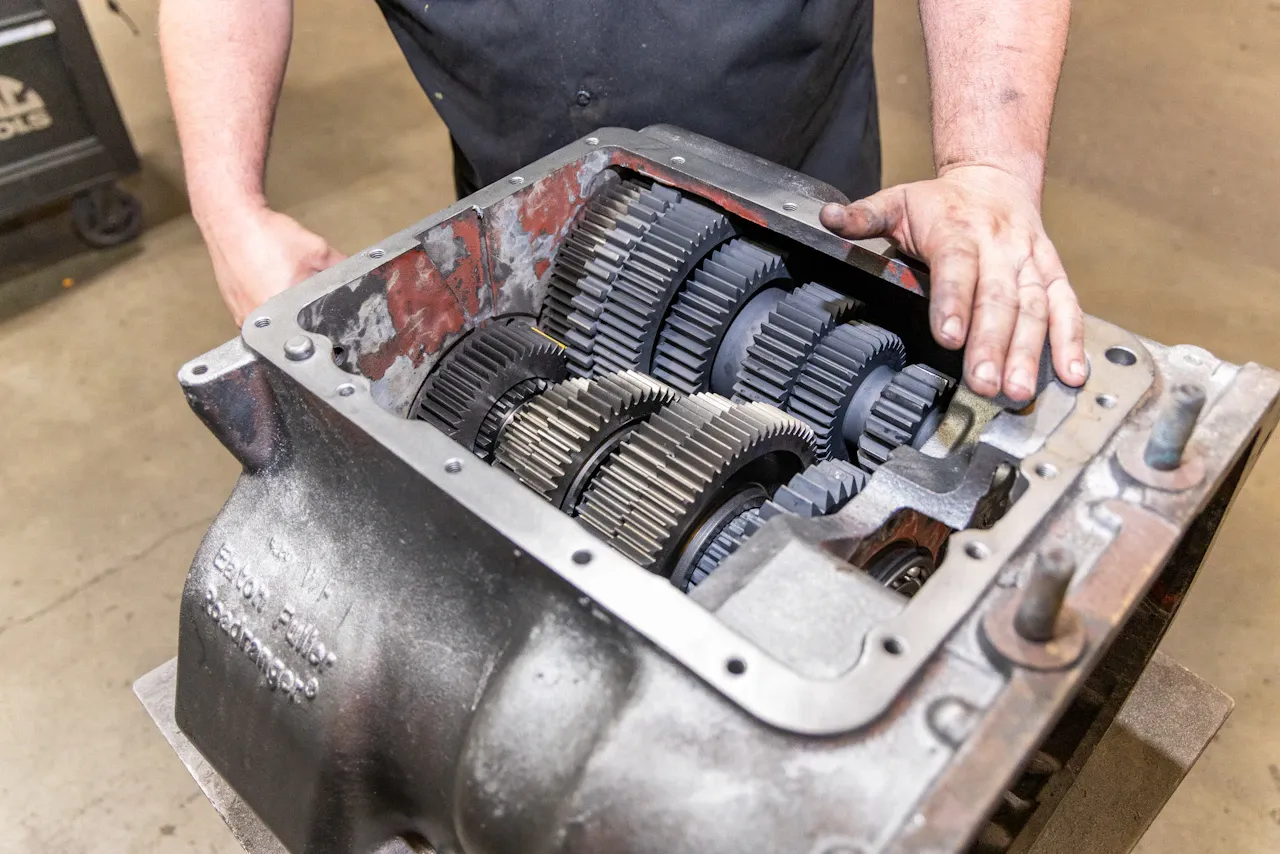
As far as manual transmissions go, there aren't many trucks on the road rocking these. And that’s because technology has made some pretty steep investments in fully automatic manual transmissions. Manual transmissions require the driver to physically select and engage gears using a clutch pedal and shift lever. Manual transmissions rely heavily on:
- Clutches
- Transmission gears
- Shift mechanisms
- Gear oil lubrication
Manual transmissions are popular in heavy-duty applications because they offer:
- Greater driver control
- Strong durability
- Excellent towing capability
- Better fuel efficiency in experienced hands
However, they also place more responsibility on the driver.
Common Manual Transmission Warning Signs
Manual transmission issues often develop gradually. Drivers usually notice changes in shifting feel or clutch engagement before complete failure occurs.
Common warning signs include:
Hard Shifting: Difficulty shifting gears can be a sign of several underlying issues, including clutch wear, linkage problems, damaged gear synchronizers, or low gear oil levels.
Grinding Noises: Grinding while shifting often indicates worn synchronizers or clutch problems. Ignoring the noise can quickly damage internal gears.
Clutch Slipping: If engine RPM rises without corresponding acceleration, the clutch may be slipping. Worn clutch discs are a common cause.
Burning Smells: Overheated clutch material creates a sharp burning odor. This often happens during heavy towing or excessive clutch slipping.
Fluid Leaks: Gear oil leaks can lead to poor lubrication and internal transmission damage if left unrepaired.
Common Manual Transmission Repairs
Manual transmission repairs often involve mechanical wear components.
Typical repairs include:
- Clutch replacement
- Flywheel resurfacing
- Synchronizer repairs
- Gear replacement
- Shift linkage adjustments
- Gear oil service
Because manual systems are mechanically simpler, repairs can sometimes be more straightforward than those for automatic transmissions.
However, severe internal gear damage can still become extremely expensive.
Automatic Diesel Transmissions Explained
Automatic transmissions shift gears without direct driver input. Instead of using a traditional clutch pedal, automatic systems rely on:
- Hydraulic pressure
- Transmission fluid
- Torque converters
- Electronic controls
- Valve bodies
- Sensors and solenoids
Automatic transmissions, on the other hand, use torque converters to allow the truck to stop without stalling while automatically managing gear changes.
These systems improve driver comfort and reduce fatigue, especially during long hauls or stop-and-go traffic.
Common Automatic Transmission Warning Signs
Automatic transmission problems usually involve fluid pressure, electronics, or internal clutch pack wear.
Common symptoms include:
Delayed Shifting: If your truck hesitates before shifting into gear, fluid pressure or solenoid issues may be developing.
Transmission Slipping: Slipping occurs when the transmission unexpectedly changes RPM or struggles to stay in gear.
Overheating: Transmission overheating can result from low transmission fluid levels, a failed transmission cooler, excessive strain from heavy towing, or internal transmission wear.
Warning Lights: Modern diesel trucks monitor transmission performance electronically. Transmission warning lights often indicate issues with sensors, solenoids, or fluid pressure.
Rough or Jerky Shifts: Harsh shifting may point to valve body problems, worn clutch packs, or electronic control issues.
Common Automatic Transmission Repairs
Automatic transmissions are more complex than manual systems, which often increases repair costs.
Common repairs include:
- Torque converter replacement
- Transmission fluid service
- Valve body repairs
- Shift solenoid replacement
- Transmission cooler repairs
- Internal clutch pack replacement
Because modern automatic transmissions rely heavily on electronics, professional diagnostics are essential for accurately identifying the root cause.
Transmission Cooling Matters for Both Systems
Heat is one of the leading causes of transmission failure regardless of transmission type.
Cooling systems remove radiant heat from transmission fluid through a radiator-like cooling process.
When cooling systems fail, fluid temperatures rise rapidly, causing:
- Fluid breakdown
- Increased friction
- Internal wear
- Seal damage
- Premature transmission failure
Routine transmission fluid inspections and cooler maintenance help prevent these issues before they become severe.
Preventive Maintenance Helps Avoid Major Repairs
Transmission repairs can become extremely expensive if problems are ignored for too long.
Preventive maintenance helps catch small issues early, preventing catastrophic failures.
Important transmission maintenance tasks include:
- Checking transmission fluid levels
- Inspecting for leaks
- Monitoring transmission temperatures
- Replacing worn clutch components
- Servicing transmission coolers
- Performing regular fluid changes
And of course, preventive maintenance reduces downtime, improves performance, and extends component lifespan.
That’s especially important for trucks working in demanding environments around Midland, TX.
Which Transmission Is Better?
There’s no universal answer because each transmission type offers advantages depending on the application.
Manual Transmission Advantages
- Better control
- Strong durability
- Lower electronic complexity
- Lower repair costs
Automatic Transmission Advantages
- Easier operation
- Reduced driver fatigue
- Smoother shifting
- Better performance in traffic
The right choice often depends on hauling demands, driving conditions, and driver preference.
Don’t Ignore Early Warning Signs
Transmission problems rarely disappear on their own. Small issues usually worsen over time, leading to:
- Complete transmission failure
- Expensive rebuilds
- Towing costs
- Major downtime
If your truck shows signs of shifting issues, slipping, overheating, unusual noises, or fluid leaks, a professional inspection should happen immediately.
Early diagnostics can often prevent much larger repairs later.
Managing Your Transmission’s Performance
Both manual diesel transmissions and automatic diesel transmissions play critical roles in heavy-duty truck performance, but they develop different problems and warning signs over time.
Manual transmissions commonly experience clutch and gear wear, while automatic transmissions often struggle with fluid pressure, electronics, and heat-related issues. Understanding these differences helps truck owners recognize problems early and avoid costly breakdowns.
Routine maintenance, cooling system care, and professional diagnostics remain essential for extending transmission life and keeping your diesel truck operating reliably.
Contact Tall City Diesel Services in Midland, TX, for expert diesel transmission diagnostics, repairs, and maintenance services that keep your truck on the road and performing at its best.
Get In Touch Today!
Tall City Diesel Services is West Texas' go-to heavy-duty diesel repair experts. We provide service in-shop in Seminole, Texas & via 24/7 mobile service units in Midland / Odessa, Texas and servicing the Permian Basin. Get in touch today for more information, to request a quote, and to schedule service.



Mobile Service Area